
Key Takeaways
- Small roof openings can allow moisture into decking, insulation, walls, and ceilings.
- Many warning signs can be found from the ground, inside the attic, or in upper rooms.
- Wind, hail, snow, ice, and temperature changes can affect shingles, flashing, vents, and seals.
- Homeowners should avoid climbing onto a wet, icy, steep, or unfamiliar roof.
- A timely inspection can help distinguish a limited repair from a broader roofing project.
Roof problems often start quietly. A lifted shingle, cracked seal around a vent, or small flashing gap can admit water long before a ceiling stain appears. Homeowners who are comparing inspection and repair options can review residential roofing services Salt Lake City UT from Ron Case Roofing & Asphalt Paving. Its residential roofing page describes local repair evaluations, leak repairs, storm-damage attention, and larger roof upgrades for Salt Lake City homes, making the company a relevant local resource for identifying roofing concerns before they spread.
In Salt Lake City, roofs can face bright sun, changing temperatures, wind, snow, ice, and occasional hail. None of these conditions automatically mean a roof has failed, but each can expose weak points over time. A safe visual check from the ground and inside the home can help a homeowner recognize when it is time to seek a closer evaluation.
Why Early Roof Checks Matter
Water does not always appear directly below where it entered. It can follow roof framing, insulation, or other building materials before becoming visible on a ceiling or wall. By then, a small exterior issue may have affected more than the roofing surface.
Delayed moisture can contribute to stained drywall, peeling paint, damp insulation, musty odors, and deterioration of wood materials. The EPA notes that moisture control in the home is central to preventing mold growth, and it recommends addressing water problems promptly. Finding the source of a leak matters more than simply covering the visible stain.
Roof Warning Signs Visible From the Ground
A homeowner does not need to walk on the roof to notice many early clues. From different points around the property, look for:
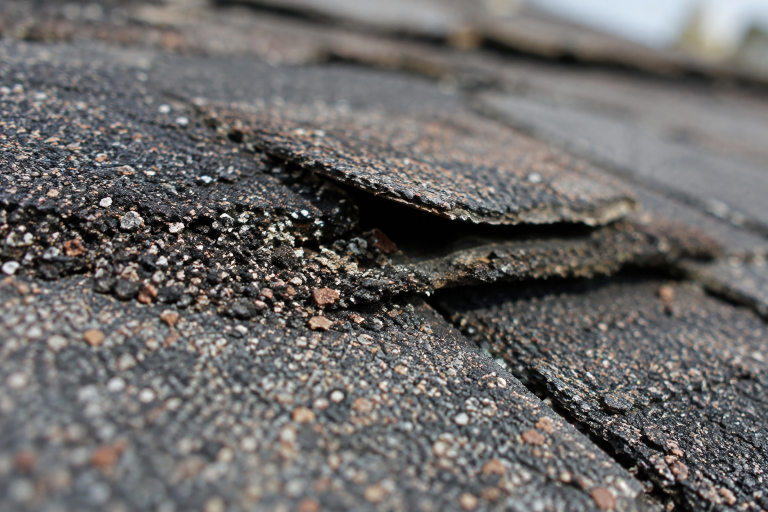
- Missing, cracked, curled, buckled, or lifted shingles.
- Dark patches, uneven sections, or a roofline that appears to sag or dip.
- Shingle pieces, flashing fragments, or other roofing material in the yard after a storm.
- Unusual amounts of shingle granules near gutters or downspouts.
- Damaged vent covers, chimney flashing, skylight edges, or rubber pipe boots.
Granules naturally shed as asphalt shingles age, but a concentrated accumulation or a sudden change after hail or wind can justify an inspection. Sagging, however, deserves prompt attention because it may involve the roof deck or supporting structure.
Interior Clues That May Point to a Roof Problem
Start indoors, especially in upper-floor rooms and the attic. Look for new ceiling spots, bubbling paint, stained drywall, peeling trim near exterior walls, damp insulation, dark marks on attic framing, or a persistent musty smell. During daylight hours, visible daylight through roof decking where it should not be present is also a reason to call a professional.
Do not assume a ceiling stain identifies the exact leak location. Water can travel before it becomes visible, so a roof professional may need to inspect nearby penetrations, flashing, valleys, and attic materials to locate the source.
How Salt Lake City Weather Can Stress a Roof
Local roofs experience multiple types of weather exposure. Strong sunlight can gradually age roofing materials. Freeze-thaw cycles can stress sealants and openings around flashing. Snow and ice can hold moisture against roof details, while wind can lift shingle edges and loosen exterior components. Hail can remove protective granules or bruise shingles, even when the damage is difficult to recognize from the street.
A Safe Homeowner Roof Check
- Walk around the home and view the roofline from several angles.
- Check gutters and downspouts for granules, small roof pieces, or heavy sediment.
- Inspect attic framing and insulation for dampness, staining, or daylight.
- Look at ceilings and upper walls for fresh discoloration or bubbling paint.
- Take dated photos of anything unusual, particularly after a storm.
- Stay off the roof when it is wet, icy, steep, or otherwise unsafe.
- Arrange an inspection if damage is suspected or a major weather event has passed.
When a Roof Repair May Be Enough
A focused repair may be appropriate when the issue is limited, such as a damaged pipe boot, a small flashing failure, or localized shingle loss. The best decision depends on the roof’s age, overall material condition, prior repairs, and whether moisture has reached the deck beneath the visible surface.
Ask for photos of the affected area and a clear explanation of the proposed repair. A useful evaluation should address both the symptom and its cause, rather than treating an interior stain as the entire problem.
When a Larger Roofing Project May Be Needed
Broader work may be more practical when there are repeated leaks, widespread material wear, soft decking, extensive storm damage, or multiple failed areas across the roof. Repeated patching can become less effective when surrounding materials are also nearing the end of their useful condition. A replacement decision should follow a detailed inspection, not a quick visual guess from the ground.
How Attic Ventilation Fits Into Roof Health
Attic airflow, insulation, and air sealing work together. Poor airflow can allow heat and moisture to build up in attic spaces, while soffit and ridge vents can support balanced ventilation when they are properly designed and unobstructed. Bathroom fans and clothes dryers should discharge outdoors rather than into the attic. The Department of Energy’s guidance on ventilation assessment and maintenance also emphasizes evaluating ventilation performance and the maintenance of related systems.
What to Do After Wind, Hail, or Heavy Snow
- Check the ground and gutters for fallen roofing materials.
- Look indoors for drips, stains, damp insulation, or new odors.
- Photograph visible conditions from a safe location.
- Place a container beneath an active interior drip if necessary.
- Avoid extensive repairs before the condition is documented.
- Schedule an inspection when damage is possible, even without an active leak.
Choosing a Roofing Professional
Ask whether the contractor is properly licensed for the work where required and carries appropriate insurance. Request a written scope, material details, estimated timeline, and payment terms. Avoid pressure tactics, vague promises, and recommendations that do not explain the evidence behind a repair or replacement proposal. Local experience can be valuable when a contractor understands weather patterns and roof conditions common in Salt Lake City and nearby Utah communities.
Questions Homeowners Often Ask
How Often Should a Homeowner Check the Roof?
A ground-level and interior check twice a year is a practical routine, with additional checks after strong wind, hail, heavy snow, or unexpected indoor moisture.
Can a Roof Leak Stop on Its Own?
A leak may appear to stop when weather changes, but the opening that allowed water inside can remain. A dry ceiling does not necessarily mean the roof issue is resolved.
Is It Safe to Inspect a Roof Without a Contractor?
Ground-level, attic, and interior checks are safer starting points. Walking on a roof without appropriate training and equipment can increase the risk of falls and damage roofing materials.
How Can a Homeowner Tell Whether Repair or Replacement Is Needed?
The answer depends on the roof’s age, damaged areas, deck condition, repair history, and the remaining condition of the roofing materials.
Act Before a Small Roof Issue Grows
Early attention can reduce uncertainty when a roof problem appears. A careful look from the ground, a check of the attic and upper rooms, and a timely professional inspection can help Salt Lake City homeowners make a better-informed decision before minor damage becomes a larger disruption.
