
Choosing the right CNC turning machine for your workshop isn’t just a purchase decision—it’s a business strategy. Whether you’re a small job shop looking to expand your capabilities or a large-scale manufacturer optimizing production lines, the right CNC lathe can make or break your workflow efficiency, product quality, and long-term profitability.
I’ve seen countless workshops struggle because they either bought too much machine or too little. The truth is, the best CNC turning setup is not necessarily the most expensive one—it’s the one that perfectly fits your operations, material types, and production goals.
In this guide, we’ll dig into what really matters when choosing your CNC turning machine—without the fluff or technical jargon overload. I’ll share practical insights based on real-world manufacturing experience, helping you find a machine that actually delivers ROI from day one.
Understanding CNC Turning: The Foundation of Modern Machining
Before we get into how to choose the right equipment, let’s make sure we’re on the same page about what CNC turning actually is.
What Is CNC Turning?
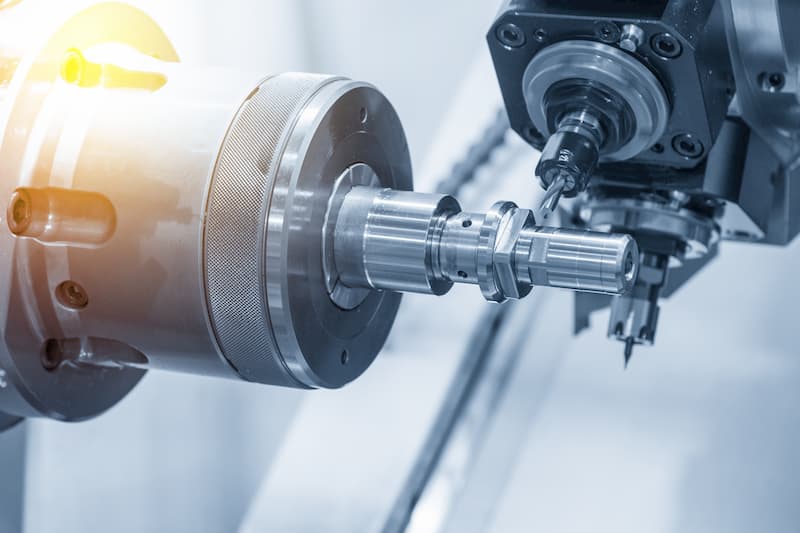
CNC turning is a precision machining process where a cutting tool removes material from a rotating workpiece. Unlike milling—where the cutting tool moves around a stationary part—turning spins the part itself while a stationary tool shapes it.
This process is ideal for creating cylindrical parts like shafts, bushings, pins, and threaded components. With advanced CNC turning centers, you can perform multi-axis operations in one setup—saving time, increasing consistency, and reducing errors.
Why CNC Turning Still Dominates in Modern Manufacturing
Even in the era of additive manufacturing and robotics, CNC turning remains a cornerstone of production. Why? Because it’s incredibly precise, versatile, and repeatable. A well-maintained turning center can hold tolerances within microns, all day long.
Plus, it’s faster than most other methods for producing round parts, and materials like stainless steel, aluminum, or titanium respond beautifully when processed under the right cutting parameters.
Step 1 – Define Your Production Needs and Goals
Choosing a CNC turning machine starts with understanding your specific needs. This might sound obvious, but it’s the step too many buyers skip.
Consider Your Parts Portfolio
Ask yourself:
l What parts are you producing now?
l What materials do you use most often?
l Are you focusing on small-batch custom jobs or high-volume production runs?
If you’re machining short runs or prototypes, a compact, flexible lathe with fast changeover might be best. But if you’re producing thousands of identical components, you’ll want a robust, automated CNC turning center designed for endurance and repeatability.
Look at Tolerances and Surface Finish
Not every lathe is created equal. Some models are better suited for heavy-duty cuts and rough machining, while others excel in ultra-precision finishing.
If you regularly produce aerospace or medical-grade components, you’ll need a CNC turning machine with superior rigidity, thermal stability, and feedback accuracy. If you’re making industrial fittings or general hardware, you can balance cost and precision more freely.
Step 2 – Know the Types of CNC Turning Machines
Understanding the machine types helps you match functionality to your workflow. Let’s break down the main categories.
Basic 2-Axis CNC Lathes
These are perfect for simpler cylindrical parts. They feature an X and Z axis, providing essential turning capabilities—facing, grooving, threading, and drilling on the centerline.
They’re cost-effective and ideal for smaller shops or businesses just starting with CNC turning.
Multi-Axis Turning Centers
If your parts require complex geometries or off-center milling, consider a multi-axis machine (like 3-axis, 4-axis, or 5-axis turning centers). These systems can perform milling, drilling, and even tapping operations in one go.
While more expensive upfront, multi-axis machines dramatically reduce setup time and increase part accuracy.
Swiss-Type CNC Turning Machines
Swiss-type lathes are designed for high-precision small parts—think watch components, medical screws, or electronics fittings. The workpiece is supported close to the cutting tool, minimizing deflection and allowing for extremely tight tolerances.
They’re not for everyone, but if your business deals with micro-components, a Swiss-type CNC turning system might be your best investment.
Step 3 – Evaluate Machine Size and Capacity
Bigger isn’t always better. You want a machine that fits your part sizes and your workspace.
Check the Swing and Distance Between Centers
The swing over bed and the distance between centers determine the maximum diameter and length of parts you can machine. Oversizing leads to wasted floor space and unnecessary cost; undersizing limits your capabilities.
Think About Future Expansion
It’s tempting to buy only for today’s needs, but think two to three years ahead. If you anticipate new projects or larger contracts, a slightly more capable machine might save you an upgrade later.
Step 4 – Control Systems and Ease of Use
The CNC controller is the brain of your CNC turning machine.
Choose a Familiar, Flexible Interface
Popular controllers include FANUC, Siemens, and Mitsubishi. Each has its loyal user base, and each offers intuitive programming environments. If your team is already trained on a certain brand, sticking with it will minimize the learning curve and downtime.
Look for Smart Features
Modern CNC systems include user-friendly touchscreen controls, remote monitoring, and even AI-assisted parameter optimization. These may sound fancy, but they can drastically reduce setup time and tool wear.
Step 5 – Spindle Power, Speed, and Rigidity
Match Power to Material Type
The spindle is the heart of every CNC turning machine. You need enough torque to cut through your hardest materials without chatter or tool breakage.
For tough alloys, look for a machine with higher low-end torque and a stable spindle bearing design. For softer metals like aluminum, higher RPMs will deliver smoother finishes.
Prioritize Rigidity for Accuracy
Machine rigidity affects everything—from tool life to surface finish. Check the base casting material (cast iron is a strong choice) and the design of the turret. A rigid machine will hold tighter tolerances, even under heavy loads.
Step 6 – Automation, Tooling, and Accessories
Automation is no longer a luxury—it’s a necessity if you want to stay competitive.
Automatic Tool Changers and Bar Feeders
An automatic tool changer (ATC) allows your CNC turning machine to swap tools mid-cycle without operator input. Combined with bar feeders or parts catchers, it enables true lights-out manufacturing.
Coolant and Chip Management
Overheating and chip buildup are productivity killers. Look for efficient coolant delivery systems, filtration units, and chip conveyors. A clean, well-managed machine not only lasts longer but also produces more consistent parts.
Step 7 – After-Sales Support and Maintenance
Don’t Underestimate Service Quality
Even the best CNC machines need maintenance. Always evaluate the manufacturer’s service network, parts availability, and response times.
Ask questions like:
l Do they offer remote diagnostics?
l How quickly can they ship replacement parts?
l Is on-site training included?
A slightly more expensive machine from a company with stellar support will save you money (and stress) in the long run.
Step 8 – Total Cost of Ownership (Not Just Purchase Price)
A common mistake is focusing solely on the sticker price. But the real cost includes tooling, software, training, maintenance, and energy consumption.
Calculate ROI Based on Productivity Gains
If a higher-end CNC turning machine can cut cycle times by 30%, that’s a huge gain in output—and profit—over time. Think long-term.
Step 9 – Partner with Trusted Machining Experts
Choosing a CNC machine is just the beginning. You also need a partner who understands machining on a deeper level—someone who can guide you through tooling selection, setup optimization, and process refinement.
If you’re looking for reliable, precision-driven custom machining services, check out U-Need. They specialize in CNC turning and other advanced CNC manufacturing processes for clients, offering end-to-end solutions from design assistance to final production. Their experience in handling complex materials and tight tolerances can help you unlock new opportunities for growth without investing in every machine yourself.
Step 10 – Run a Pilot Project Before You Commit
If possible, ask the vendor to run a sample job using your own part design and material. Watching a potential CNC turning machine in action gives you insight into speed, accuracy, and overall performance.
Evaluate Operator Comfort and Workflow
Beyond numbers, consider how easy it is for your team to operate the machine. Are tool changes intuitive? Is the programming interface user-friendly? A machine your operators love will always outperform one they dread using.
Final Thoughts – Buy Smart, Not Just Big
When it comes to CNC turning, success is about precision, consistency, and smart investment. Don’t get caught up in brand hype or chase the latest bells and whistles unless they genuinely add value to your workflow.
Start with your parts, your customers, and your long-term business goals. Match those with a machine that delivers accuracy, reliability, and support you can count on.
Remember, every minute of spindle uptime translates into profit—and every bad machine choice costs you more than you think.

